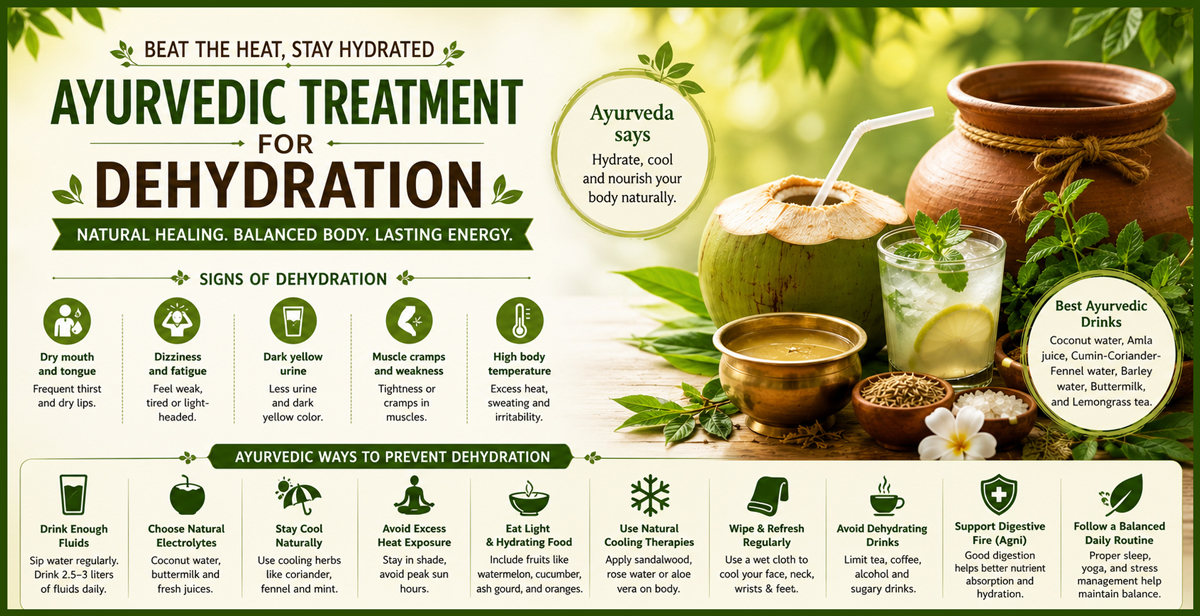
Avoid dehydration by following the rules of Ayurveda
According to Ayurveda, when the temperature reaches close to 45 degrees in scorching heat, the pitta dosha of the body increases abnormally. Excess of this bile causes excessive heat, sweating and weakness in the body. Sweating not only dehydrates the body, but also removes important minerals from the body, thereby disrupting the normal balance of the body and causing dehydration.
What is dehydration: an Ayurvedic explanation
In Ayurveda, dehydration is seen as "trishna" or excessive thirst and "rasa dhatu kashya." When the juice or liquid part of the body decreases, the body becomes dry and energy decreases. When the body loses a lot of water during the summer season, it leads to various problems. Although this condition is called dehydration in modern terms, in Ayurveda it indicates a deep internal imbalance in the body.
Heating and dehydration
Excess heat is produced in the body due to increase in pitta dosha in summer, which is the main cause of 'heat dehydration'. As a result, the amount of water and salt in the body decreases. In Ayurveda, it is said that if the body is not kept cool and smooth, the bile increases further and the problem can become serious.
Symptoms: How the body responds
During dehydration, the body itself gives various signals. According to Ayurveda, dry mouth, dry tongue, excessive thirst, dizziness, fatigue, vomiting - all these are symptoms of abnormal increase in bile. In many cases, the color of the urine becomes dark yellow and can cause muscle spasms, indicating a lack of water inside the body.
When to treat at home, when to take emergency measures
In Ayurveda, it is believed to be possible to manage dehydration at an early stage through home remedies. It is very important to keep the body cool and take enough rest. But if dizziness increases, body temperature rises too high or symptoms like seizures appear, then it is considered a serious condition. At this time it is necessary to urgently consult a doctor, as this can lead to heat stroke.
How much water do you need: simple rules of Ayurveda
According to Ayurveda, water should be consumed as per the requirement of the body and not by force. But in summer, you need more water than usual. A healthy person needs about two and a half to three liters of water a day, but this depends on his weight and physical condition. You should drink water only when you feel thirsty and it is better to drink enough water at a time, not in small amounts.
Natural drinks and ways to keep body cool
Ayurveda emphasizes on natural drinks to keep the body cool in summer. Cucumber water, homemade lemonade, cumin or coriander soaked water keeps the body cool and balances the minerals. Sugarcane juice is also useful, but it must be clearly prepared. Avoid outside food and drinks.
How to protect yourself when you're out
It is very important to protect the body when out in the sun. Ayurveda recommends covering the head, wearing light and loose clothing, and drinking water frequently. Always have water or a natural beverage with you. Occasionally, relaxing in the shade and rinsing the face and neck with cold water can provide relief.
Food and nutrition for children
The body of children in the heat can quickly suffer from dehydration, so the same rule applies to them. Ayurveda suggests avoiding foods with excess protein at this time, as it increases the heat in the body and puts pressure on the kidneys. Instead, it is better to eat light, easily digestible and water-rich food.
Taking care of the body from heat
Do not sit under the AC or fan immediately after returning from the scorching heat. According to Ayurveda, the body needs to be brought back to normal temperature gradually. It is better to first rest for a while, and then wipe the body with a wet cloth. After that, the body can easily adapt to the use of a fan or AC.
Whole-care protection
According to Ayurveda, prevention is the best cure. Therefore, keeping the body cool in the summer, drinking enough water, following a proper diet and taking rest is the most effective way to avoid dehydration. By paying attention to the small signals of the body, big problems can be easily avoided.