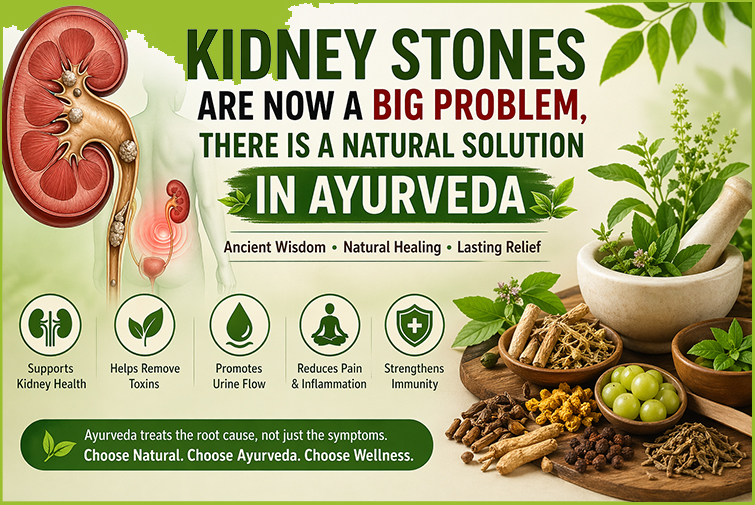
Kidney stones are now a big problem there is a natural solution in Ayurveda
Kidney stones or urethritis has become a very common health problem nowadays. Both men and women, young and old, suffer from this problem. An unhealthy diet, lack of exercise, drinking too much water, drinking too much salt, and being overweight are some of the major risk factors for diabetes. Although modern medicine provides drugs, laser therapy or surgery for kidney stones, many people are now turning to natural and integrated treatment. In that place Ayurveda shows an ancient but effective way.
The name and description of kidney stones in Ayurveda
Kidney stones are commonly referred to as' Ashmari 'in Ayurveda. The Sanskrit word "ashma" means stone, and "ashmari" means stone-like solid formed inside the body. In the ancient Ayurvedic texts the solid particles accumulated in the urinary bladder, urethra and kidneys have been included in ashmari. According to Ayurveda, when the normal balance of doshas, metals and stools is disturbed, toxic waste starts accumulating in the body and gradually it can take the form of stones.
How Stones Are Made: The Inequality of Faults
According to Ayurveda, the three doshas - Vata, Pitta and Kapha - are the main regulating forces of the body. Increase in kapha dosha produces stickiness, increase in bile produces burning sensation and increase in temperature, increase in rheumatism produces pain, constriction and obstruction in movement. When these three defects cause an imbalance in the urinary stream, the minerals in the urine can accumulate and turn into hard particles. It then grows into a kidney stone.
Why kidney stones are on the rise today
The incidence of kidney stones has increased a lot due to lifestyle changes. Fast food, packaged food, excess protein, drinking less water, sitting for long periods of time, and frequent urination are the major causes of this. Ayurveda refers to this lifestyle as "false dieting." That is, the diet and habits that are incompatible with the nature of the body give rise to diseases.
Common symptoms of kidney stones
When you have a kidney stone, you may not have any symptoms at first. However, if the stone is large or starts to move, there is severe pain. Abdominal pain, cramping, nausea, vomiting, diarrhea, abdominal pain, and blood in the stool. According to Ayurveda, increase in Vata dosha can cause severe pain, increase in Pitta can cause burning sensation and bleeding, and increase in Kapha can cause heaviness and blockage.
How Ayurveda Treats
In Ayurveda, the goal is not just to break or remove the stone, but to understand why the stone is formed. Treatment is done by considering the nature of the patient, food habits, amount of water consumed, digestion, nature of faeces and urine, mental stress and history of chronic diseases. Therefore, two patients with the same problem cannot be treated at the same time. This is the traditional medicine of Ayurveda.
Main role of natural herbs
There are many herbs in Ayurveda that are used as diuretics, anti-inflammatories and stone-cutters. Pashanveda, Gokshur, Punarnava, Varuna, Kulatha, Yavakshar etc. herbs have been used for a long time. They can help loosen accumulated mineral particles in the body, increase urine flow, and reduce inflammation. They should be used under the guidance of a doctor.
Panchakarma help
Ayurvedic Panchakarma can also be helpful in some cases. Specific treatment methods are used to remove the accumulated doshas from the body, improve metabolism and keep the urinary system clean. However, it is not for all patients. The doctor makes a decision based on the patient's strength, age, size of the stone and overall condition.
A change in diet is the best medicine
Diet control is very important for kidney stones. Ayurveda says that along with medicine, diet is essential to cure diseases. It is beneficial to drink enough lukewarm water, reduce excess salt, avoid processed foods, limit excess tea and coffee, and eat light easily digestible foods. Cucumber, gourd, coconut water, barley water, fruits and green vegetables can be helpful.
What foods should be avoided
Those who are prone to stones should reduce their intake of spicy foods, too much sour, too much salt, too much fried food, soft drinks and frequent outside food. The habit of eating late at night, sleeping late and not feeling hungry also spoils the digestive power. In Ayurveda, weak fire or digestion is said to be the root cause of many diseases.
Ayurveda's approach to reducing pain
When the stone moves, it hurts a lot in the stomach. This pain is often felt as a cramp. Ayurveda tries to reduce the pain by using arthritic herbs, warm compresses, oil massages, and specific eating habits. But if you have severe pain, you should see a doctor immediately.
When it is necessary to use modern medicine
Although Ayurveda is an effective supportive system, herbal treatment alone may not be sufficient in all cases. If urination stops, fever comes, kidney function decreases, there is acute infection or big stone gets stuck, then urgent modern treatment is needed. The proper use of Ayurveda is to take integrated treatment as per the need.
What to do to prevent the recurrence of the stone
In many patients, the stone comes out once and then comes back again. So it's not just the ending. Be sure to drink plenty of water, exercise regularly, eat a balanced diet, exercise regularly, and get regular health checkups. In Ayurveda, special emphasis is laid on the daily routine.
It's also related to stress
Many people do not know that long-term stress affects the body's metabolism and hormones. This leads to digestive disturbances, less intake of water, irregular lifestyle, etc., which can increase the risk of stones. Yoga, pranayama, meditation and adequate sleep are helpful in this regard.
Awareness and proper treatment
Kidney stones are a very common problem today, but it can be complicated if neglected. Ayurveda not only cures the disease but also removes the root cause of the disease and restores the natural balance of the body. A healthy diet, regular exercise, drinking plenty of water, and regular physical activity can help you achieve the best results. However, the safest way is to consult a specialist doctor as soon as possible if there are large stones or complex symptoms.