Panchakarma Diet and Therapy Guide for Better Health and Immunity
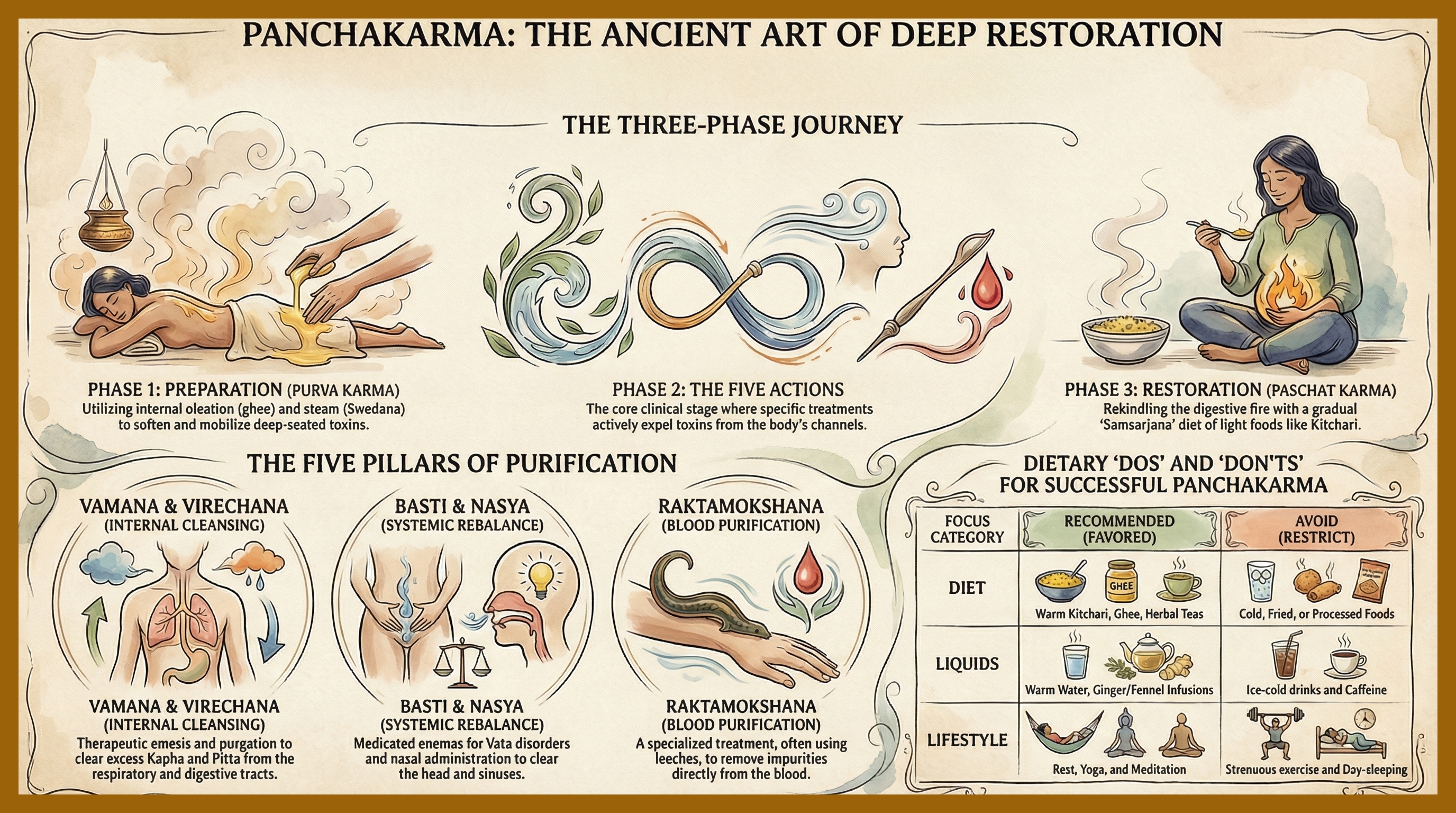
Panchakarma is an ancient purification system of Ayurveda. The main goal of this process is to balance the three doshas (vata, pitta and kapha) by removing toxic waste or 'ama' from the body. The five main stages of Panchakarma are Vamana, Birechana, Basti, Nasya and Raktamoksha, which rejuvenate the body from within. The sources explain the importance of the three stages of treatment - pre-action, main action and post-action, in which it is necessary to follow the rules of proper diet and lifestyle. In particular, the risks of doing these complex procedures alone at home without the direct supervision of a specialist doctor have been warned. Overall, this therapy is highly effective in boosting immunity, calming the mind and curing chronic physical problems.
What are the five main stages of Panchakarma Therapy and what are their functions?
Panchakarma is an ancient and profound detoxification or purification process in Ayurveda, which aims to restore the balance between body, mind and spirit by removing toxins (called 'aam' in Ayurveda) from the body. The word "Panchakarma" literally means "five actions" or purification process.
According to the sources, the five main stages of Panchakarma and their functions are discussed in detail below:
1. Vamana is basically a process of therapeutic vomiting. Its main function is to remove excess phlegm from the stomach and lungs. It is very effective in the treatment of asthma, bronchitis, sinusitis and various skin diseases.
2. Virechana: This step involves controlled defecation or abdominal cleansing with herbal medicines. Its main function is to remove excess pitta from the body and toxins accumulated in the liver or intestines. It is used to treat high blood pressure, acidity, and chronic skin diseases (such as acne or eczema).
3. Basti is basically an enema therapy, where medicinal oil or herbal decoction is applied through the rectum. It is considered to be the most powerful and effective method of Panchakarma. Its main function is to balance the vata dosha and cleanse the colon or rectum. It is especially useful in the treatment of constipation, rheumatism, paralysis and joint pain.
4. Nasya - In this process medicinal oil or herbal decoction is applied on the nostrils. Its function is to remove problems of the head, nose, ears, throat and neck and to cleanse the sinuses. It helps with chronic headaches, migraines, sinusitis, and increased mental clarity.
5. Raktamokshana is a method of blood purification, in which impure blood is removed from the body. In many cases, it is treated with leech therapy. Its main function is to cure complex skin diseases, chronic infections and inflammation of a particular place in the body by eliminating blood-borne toxins.
Special Warning: Panchakarma is not just a massage, it is a complex medical procedure. According to sources, these therapies must be done under the supervision of a qualified and experienced Ayurvedic practitioner, as they may cause some side effects such as fatigue, dizziness or dehydration.
What should be the diet or food during Panchakarma therapy?
The success of Panchakarma treatment depends to a large extent on proper diet. The main goal of this process is to remove toxic substances or 'mangoes' from the body and strengthen the digestive power or 'fire'. Below is a detailed description of how the diet should be in different stages of treatment:
1. Preparation phase (pre-work) This phase prepares the body for the main detox.
Easy-to-digest foods: Eat foods that are light and easily digestible, such as rice flour or moong dal soup.
Use of spices: It is recommended to add 'triktu chudra' (a mixture of ginger, pepper and peepul) in food to increase digestion.
Avoid: Avoid oily, spicy, fried and junk food.
2. During the main treatment (main action) the body is very sensitive during the treatment, so the diet should be very simple and nutritious.
Khichdi is the main food of the Panchakarma. Made with rice, moong dal, ghee and certain herbal spices, this khichdi nourishes the body and relaxes the digestive system.
Drink water: Drinking water throughout the day helps flush out toxins from the body.
Sattvic diet: Processed or spicy food should not be eaten at all.
3. Next recovery phase is a western karma or samsarjan karma. It is very harmful to go back to heavy food directly after end of main therapy. Therefore, this process of gradually returning to normal food is called 'samsarjan karma' in Ayurveda. The steps are:
- First, very thin rice flour (peya).
- Then a little bit of Vilepi.
- Then there is dal soup or yusha.
- At the end of the day, eat a healthy diet with plenty of vegetables and fruits.
Here are some general rules and precautions:
- Avoid cold water or cold drinks.
- Milk and other dairy products should be avoided.
- One should take adequate rest with food and avoid sleeping during day as it hinders the detox process.